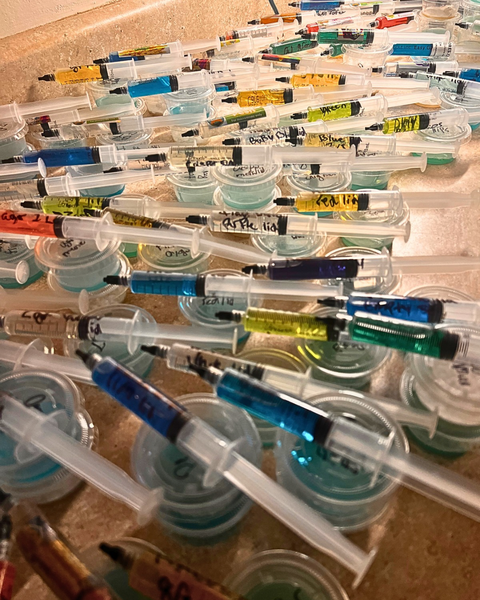
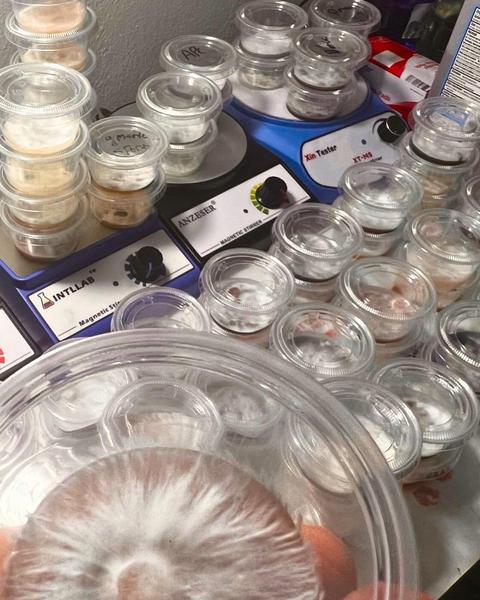
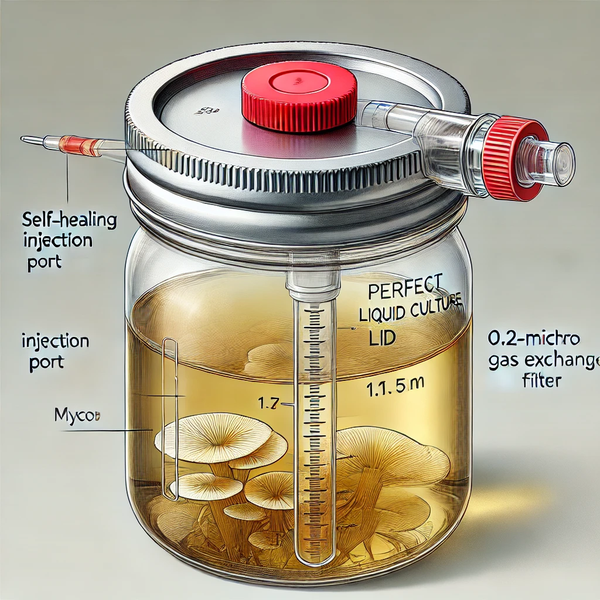
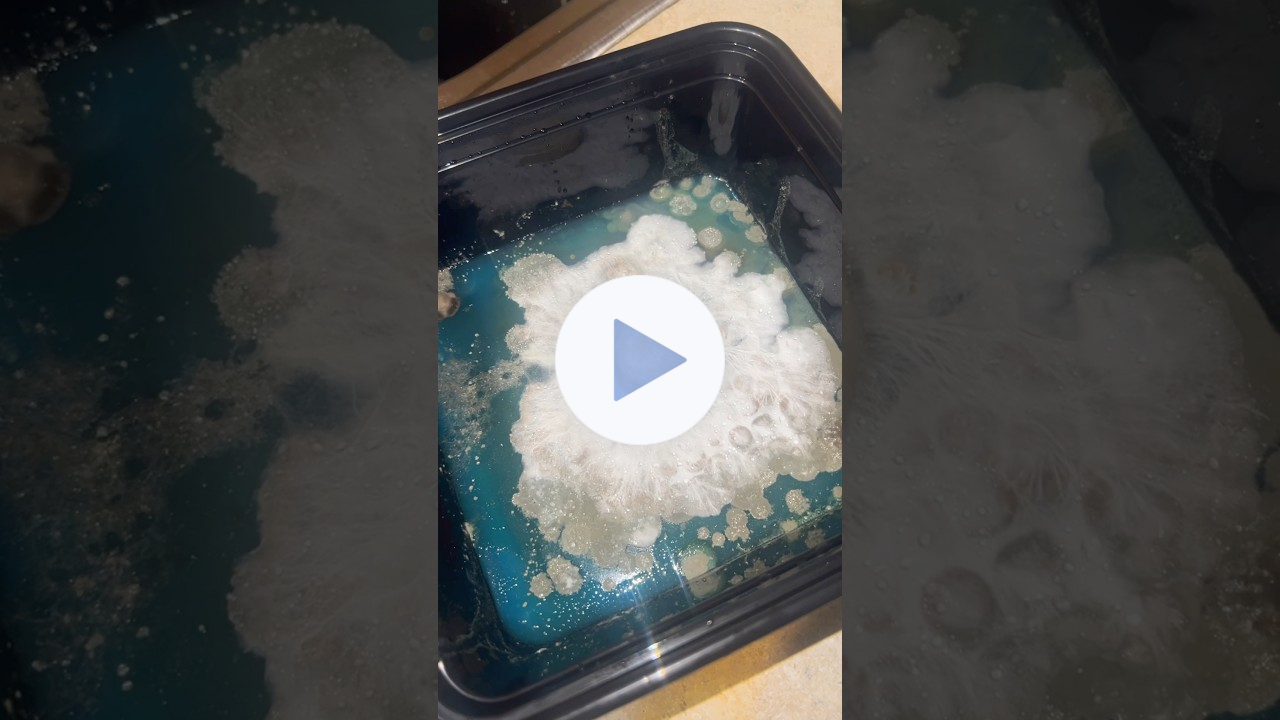
Maintaining a vast collection of lab-grade mycelium cultures is both a science and an art. Each liquid culture represents a living organism requiring meticulous care to thrive. Here are some insights into the upkeep of such a collection:
1. Storage: Liquid cultures are typically stored in sterile glass vials
or bottles, kept in temperature-controlled environments (usually between 4-10°C) to prevent contamination and slow metabolic activity.
2. Labeling and Organization: With dozens or even hundreds of strains, proper labeling with strain names, dates, and generation details is critical. A well-organized database or labeling system ensures nothing is misplaced.
3. Routine Monitoring: Regularly inspect cultures for signs of
contamination (e.g., cloudiness, off-smells, or discoloration). Any compromised cultures must be discarded immediately to prevent cross-contamination.
4. Subculturing: Liquid cultures require periodic subculturing to maintain viability. This involves transferring a small amount of the original culture into fresh sterile liquid media under aseptic conditions.
5. Media Preparation: Preparing nutrient-rich media, such as
malt extract or potato dextrose broth, is essential to ensure optimal growth conditions for your mycelium.
6. Aseptic Technique: Preventing contamination is an ongoing challenge. Working in a laminar flow hood or cleanroom environment with sterilized tools is non-negotiable.
7. Data Logging: Keeping detailed notes about each strain’s growth patterns, ideal conditions, and experimental results is vital for long-term
success.
8. Passion and Dedication: Above all, maintaining a massive collection of mycelium cultures requires patience, attention to detail, and a deep love for fungal biology.
For enthusiasts and researchers alike, this work is a labor of love that opens doors to exciting discoveries in mycology, biotechnology, and sustainable practices.